
Florida Arrest Records
Florida arrest records are public under state law. Anyone can search them through county sheriff websites or the statewide FDLE database. Each of Florida's 67 counties runs its own jail and keeps booking records at the local sheriff's office. The Florida Department of Law Enforcement holds a central criminal history database that covers all counties. You can look up arrest records online through inmate search portals, the FDLE Public Access System, or the Comprehensive Case Information System. In-person requests are also an option at any county jail or sheriff office across the state of Florida.
Florida Arrest Records Quick Facts
Search Florida Arrest Records Online
The Florida Department of Law Enforcement is the main state agency for criminal history records. FDLE collects arrest data from every law enforcement agency in the state. Local police and county sheriffs send booking data to FDLE after each arrest. This builds a central database for all of Florida. The agency is based at 2331 Phillips Road in Tallahassee and can be reached at (850) 410-7000. Their main website has links to all search tools and public records services for Florida arrest records.
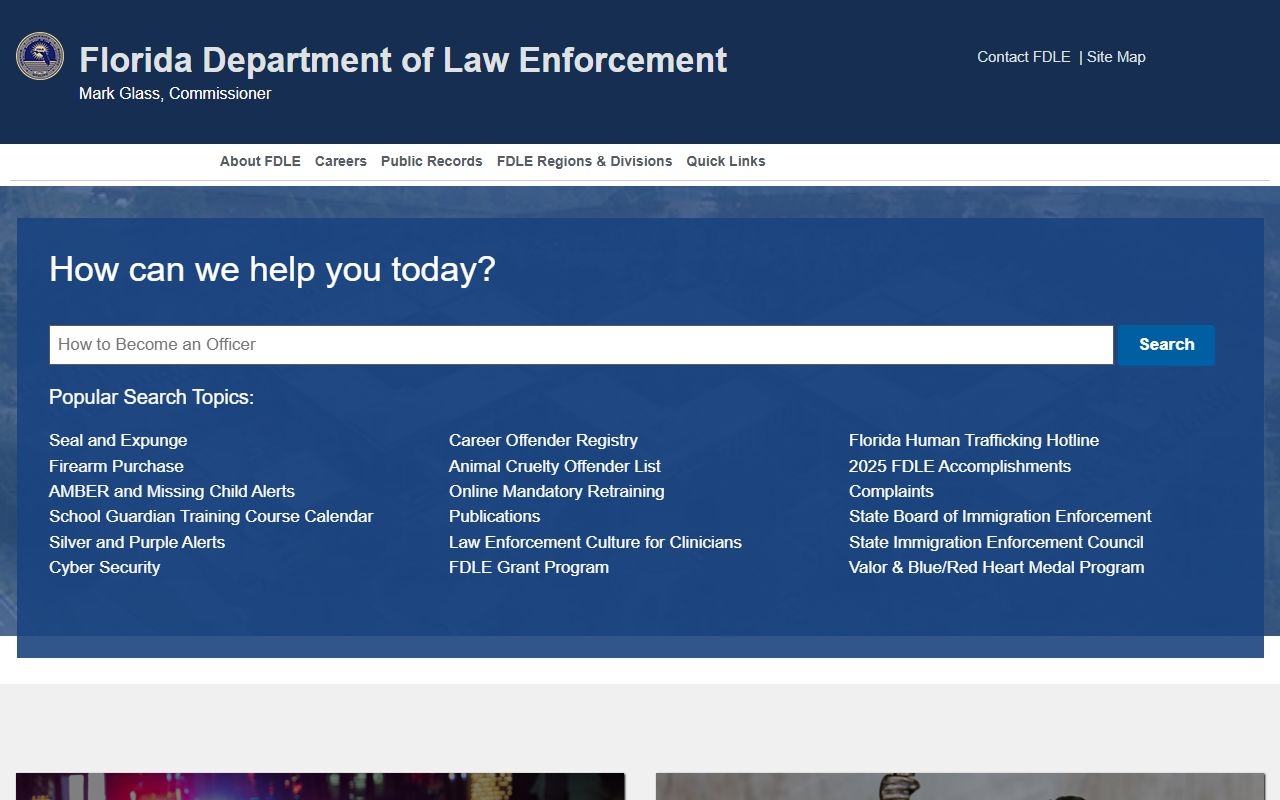
The quickest way to check arrest history in Florida is through the Criminal History Record Check. This runs a name-based search against the statewide database. You need the person's full name to start. Date of birth and gender can help narrow results. A Social Security Number is not required but helps with common names. Results show up right away. The system may return a single match, several possible matches, or a "no record found" response. Under Section 943.053 of the Florida Statutes, criminal history records are public unless a court has sealed or expunged them. Each search costs $24 plus a $1 processing fee for a total of $25.
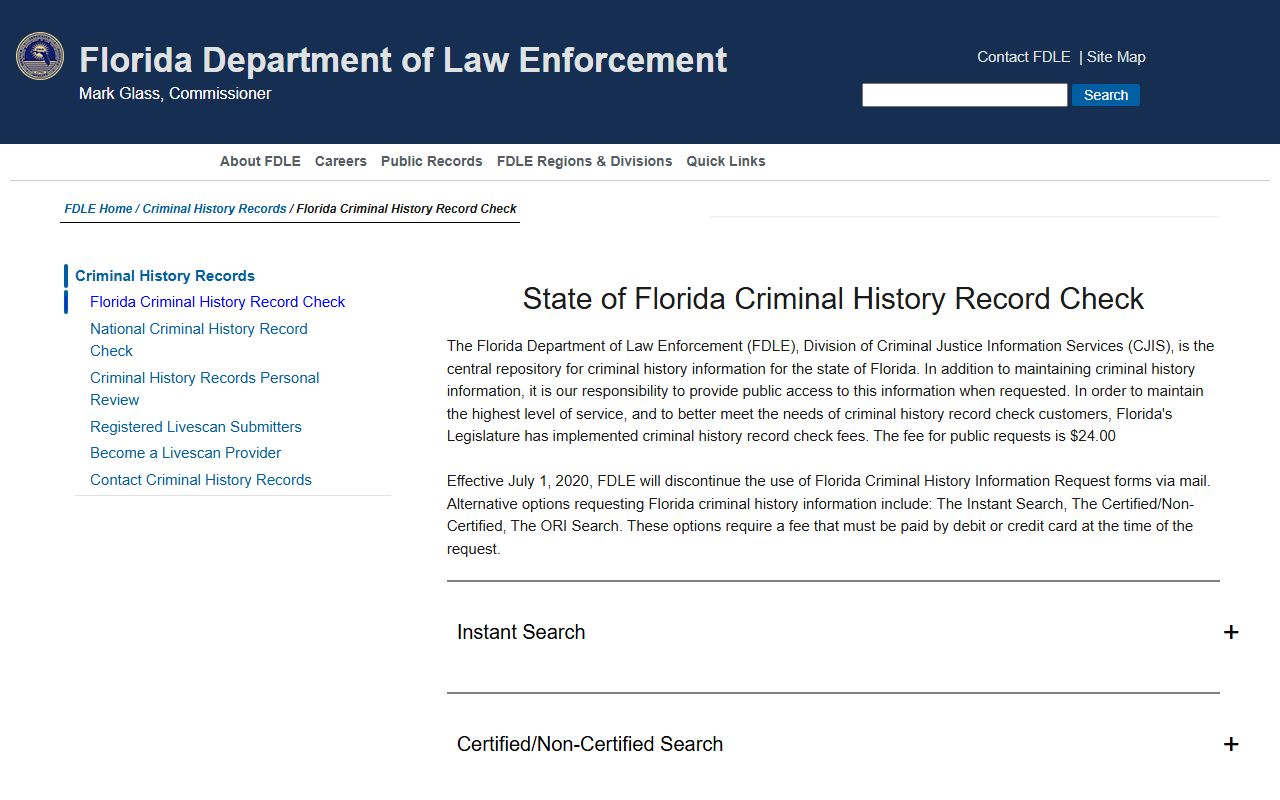
Mail requests take 5 to 7 business days. Send them to P.O. Box 1489, Tallahassee, FL 32302-1489.
Florida Arrest Records Public Access
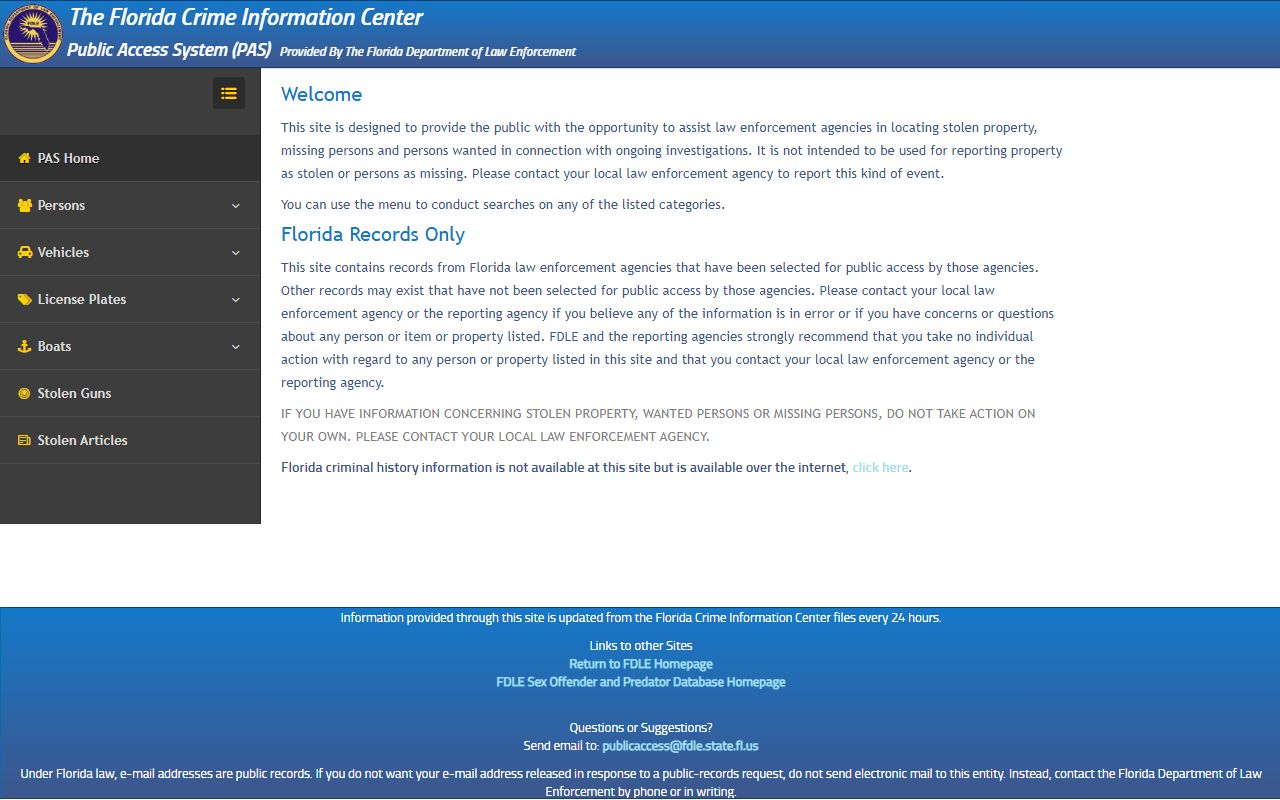
FDLE runs the Public Access System for searching arrest data and criminal history across Florida. The PAS links to the Florida Crime Information Center database. It pulls arrest records from all 67 counties into one searchable system. Government agencies, law enforcement, and the public all use it. The system covers both current and old arrest data going back years. It is available online at all hours, so you can search for Florida arrest records any time of day.
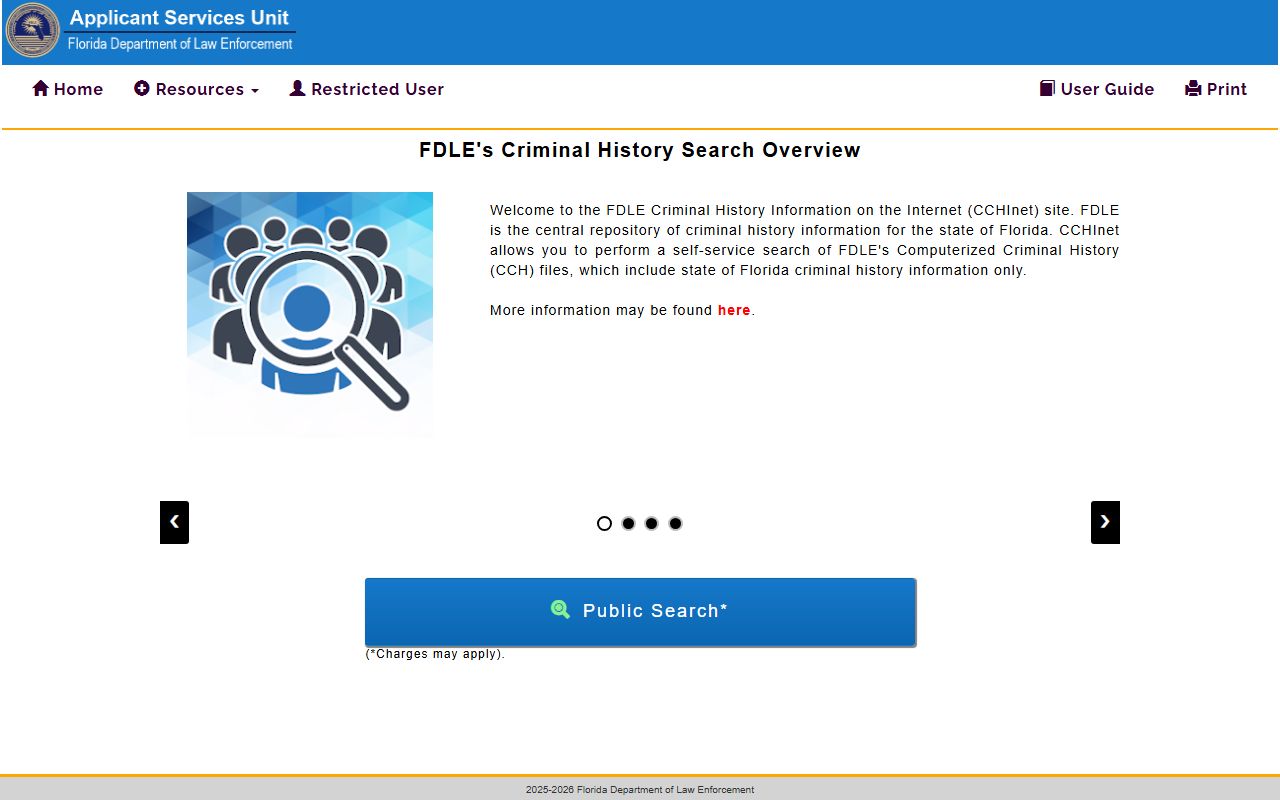
For more detailed criminal history data, FDLE also provides the CCHInet portal. This is the Criminal Justice Information Network. Public users can access parts of the system for Florida arrest record searches. CCHInet works with the Public Access System to give a full view of arrest and criminal history information across the state.
Florida Court Case Records
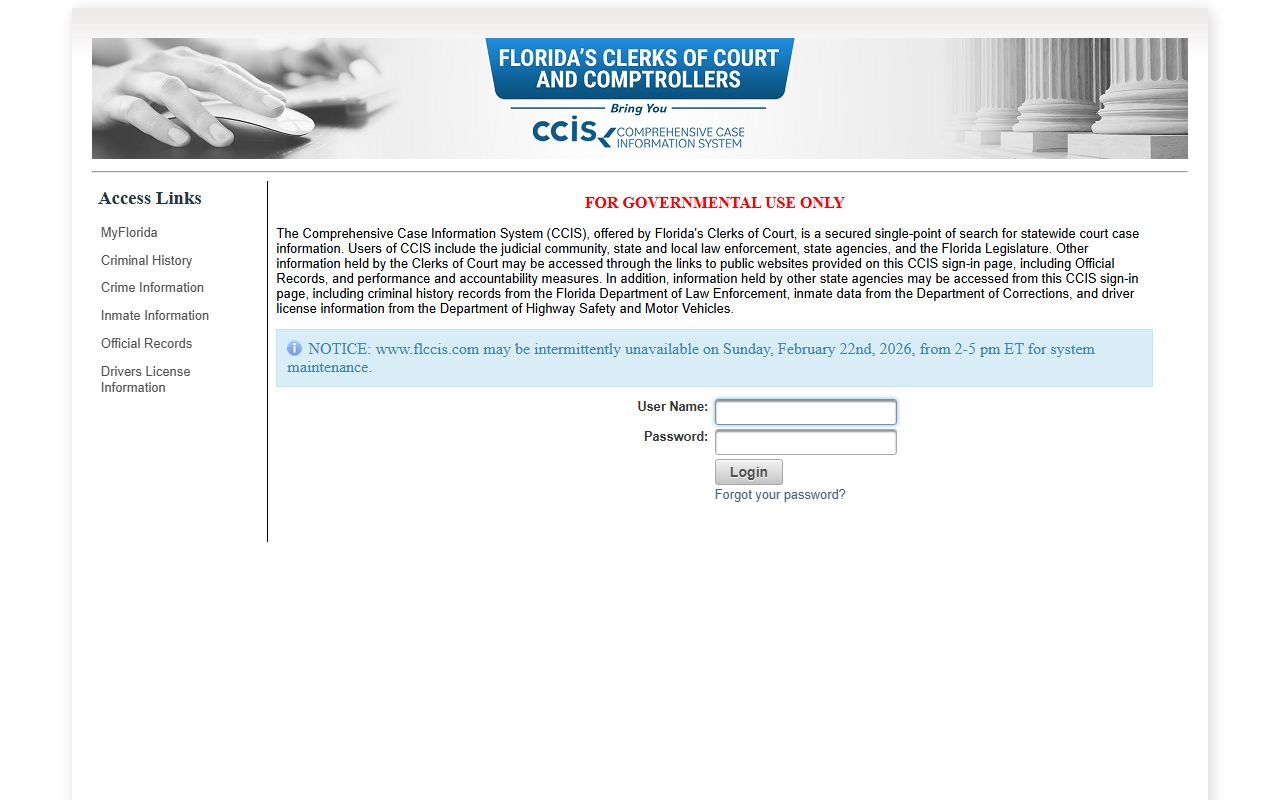
The Comprehensive Case Information System is Florida's statewide court records database. CCIS holds over 150 million cases and 400 million names. It launched in 2002 and was updated to version 3.0 in 2016. The system pulls real-time case data from all 67 Florida counties. Over 45,000 active users from government agencies rely on CCIS to search criminal, civil, juvenile, probate, and traffic cases. Case data in the system includes charge details, court events, warrant information, sentencing records, and financial assessments tied to Florida arrest records.
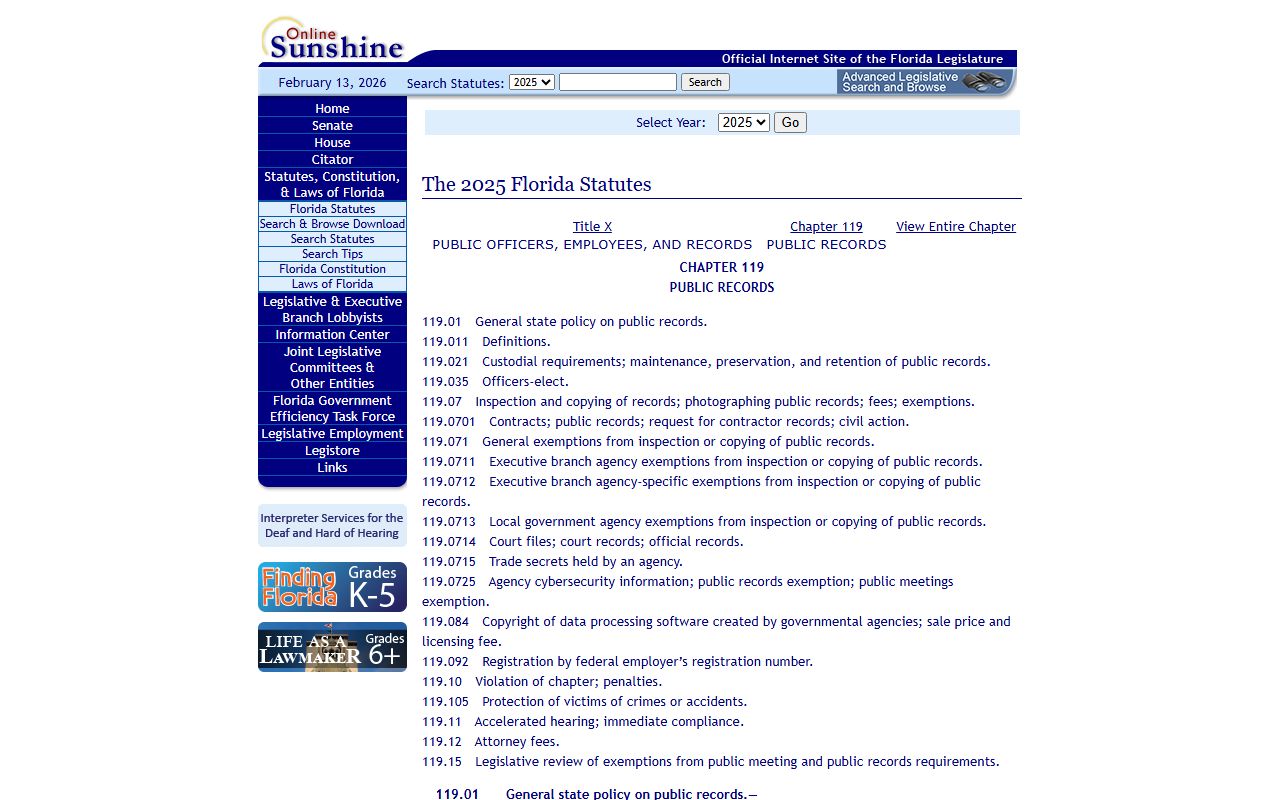
Florida's Sunshine Law gives broad public access to these records. Chapter 119 of the Florida Statutes makes government records open to anyone. Section 119.07 sets the right of access. Section 119.011(12) defines public records broadly to cover documents, data processing, and other materials. You do not need to state a reason when you ask to see arrest records in Florida. Some records may have restricted parts, though. Active investigations, victim names, juvenile records, and protected personal data like Social Security Numbers can be redacted from what you see.
An arrest record shows that a person was taken into custody or given a notice to appear. It is not a finding of guilt.
Florida Inmate and Offender Search
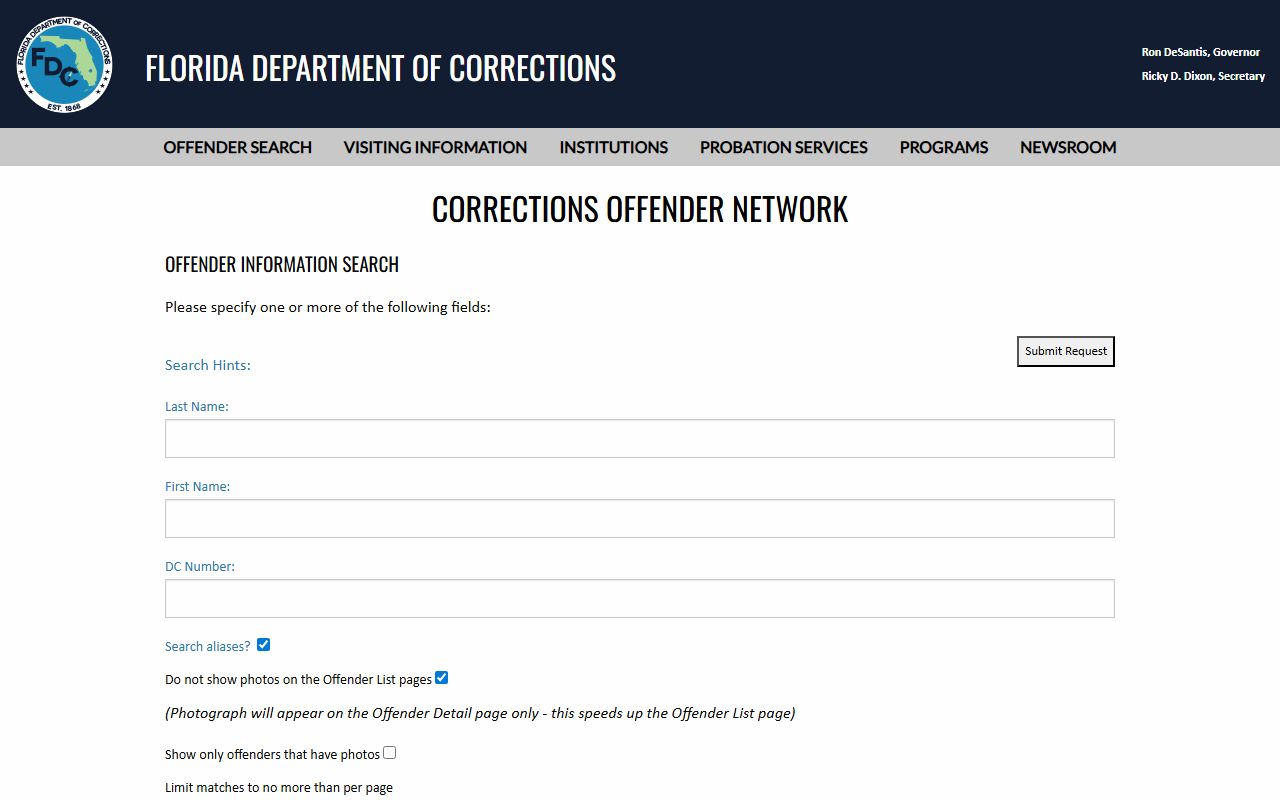
The Florida Department of Corrections runs the Offender Search tool for state prison records. You can look up inmates by DC Number or by name. The DC Number is a 6-character code that may be all numbers or a mix of letters and numbers. Name searches include an alias option. Results show committed names, aliases, and case details. The FDC office is at 501 S. Calhoun Street in Tallahassee. For public records questions tied to arrest and offender records in Florida, contact the custodian James Best at (850) 717-9774.
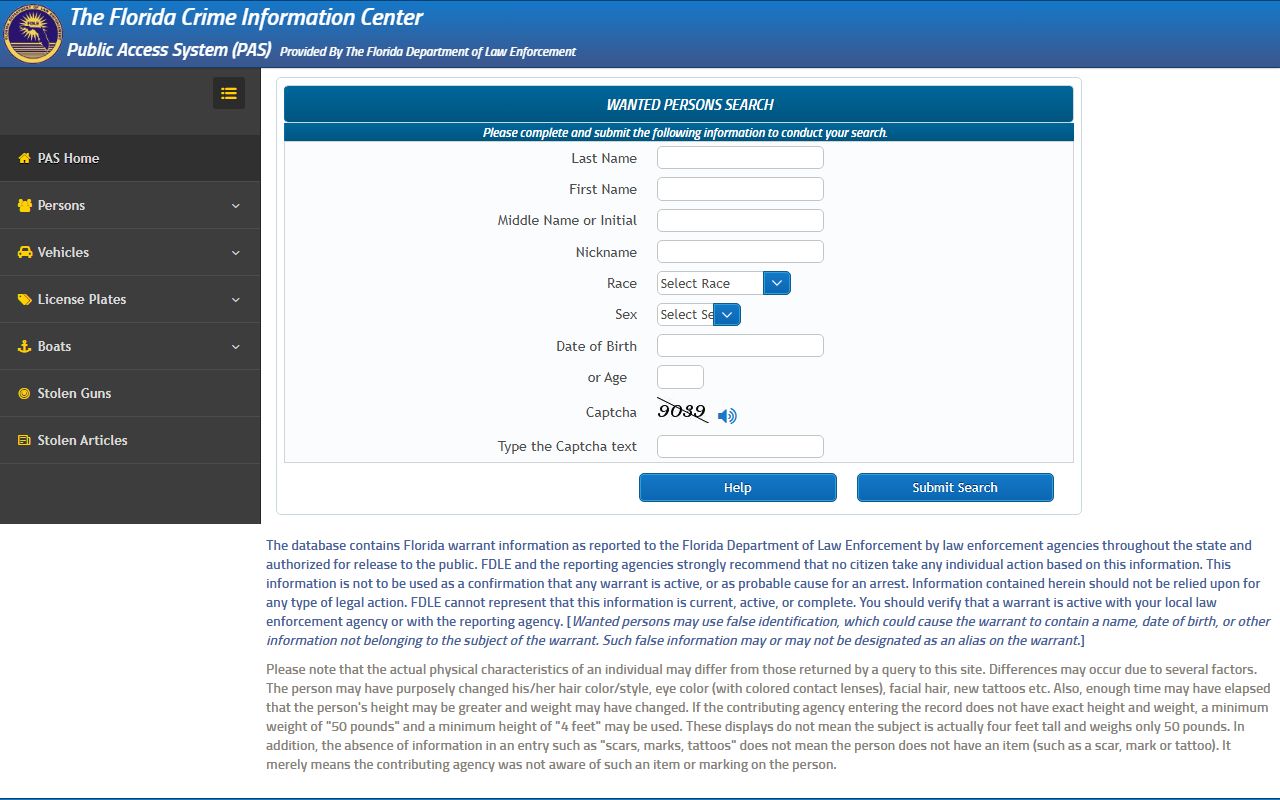
FDLE also keeps a Wanted Persons database through the Public Access System. This tool lists people with active warrants from agencies across Florida. Under Section 901 of the Florida Statutes, law enforcement has the authority to make arrests with or without a warrant in certain cases. Section 903 covers bail and bond rules after an arrest. County jails across Florida post booking data and mugshots on their own websites too. Most sheriff offices let you search current inmates online for free.
Sealing Florida Arrest Records
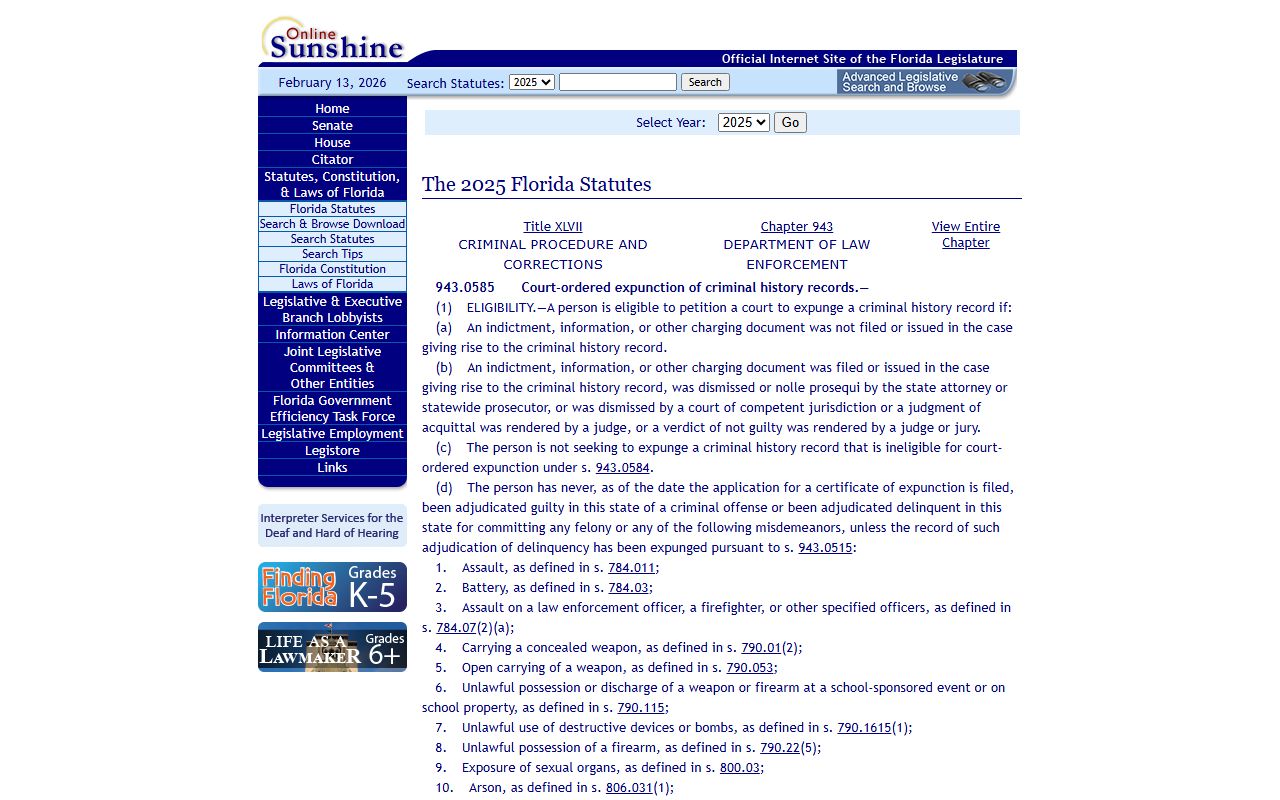
Not all arrest records in Florida stay public. The state allows people to seal or expunge their records under certain conditions. The process starts with an application to FDLE for a Certificate of Eligibility. Section 943.0585 of the Florida Statutes sets the rules for court-ordered expungement. Section 943.059 covers sealing. Both require the certificate before you can petition the court. You must apply through the Clerk of Courts in the county where the arrest took place.
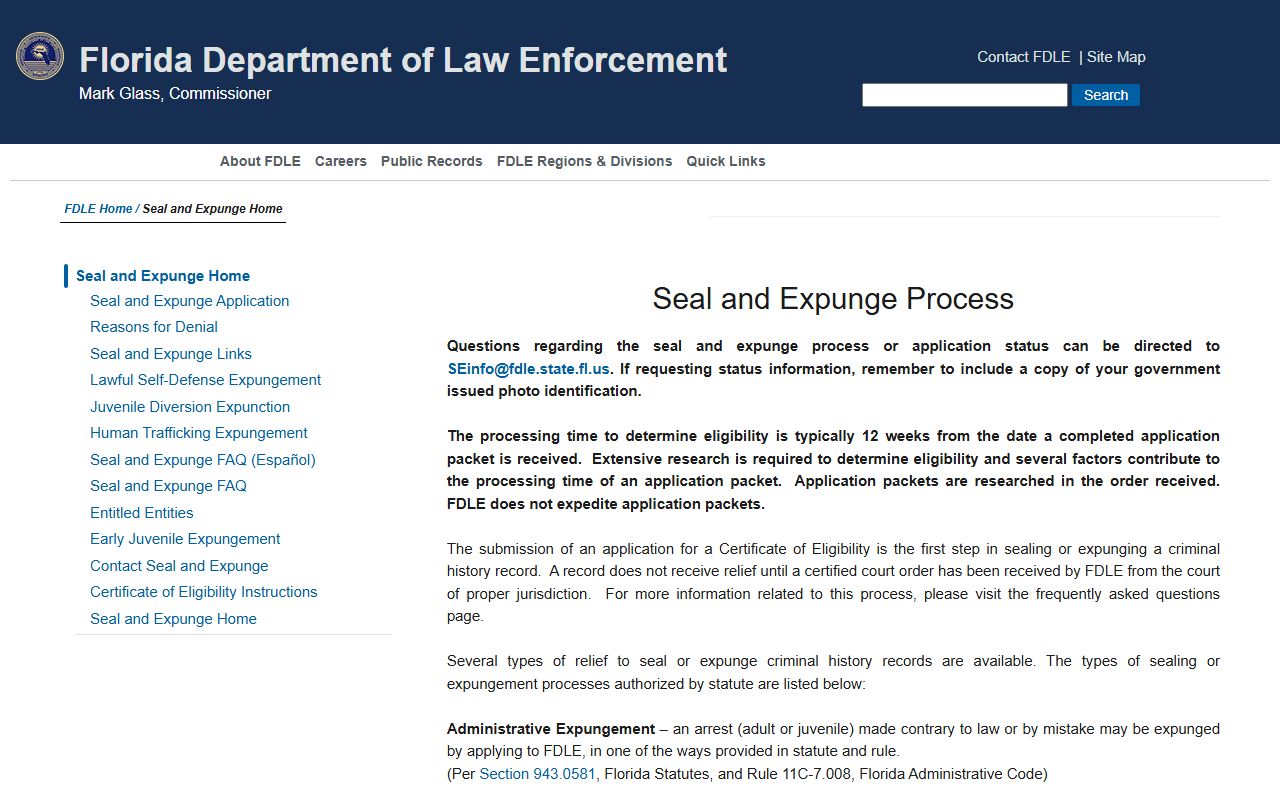
The certificate costs $75 and takes about 12 weeks to process. FDLE does not rush these. It stays valid for 12 months after the date stamped on it. Visit the FDLE seal and expunge page for full details and application forms. Several types of relief exist for Florida arrest records. Administrative expungement under Section 943.0581 applies when an arrest was made by mistake or against the law. Juvenile diversion expungement under Section 943.0582 covers minors who finish an approved program. A sealed record stays hidden from the public but is still available to some government agencies. An expunged record is physically destroyed by all agencies except FDLE, which keeps one confidential copy.
Note: A person may lawfully deny arrests covered by an expunged record, with a few exceptions.
Florida Arrest Record Resources
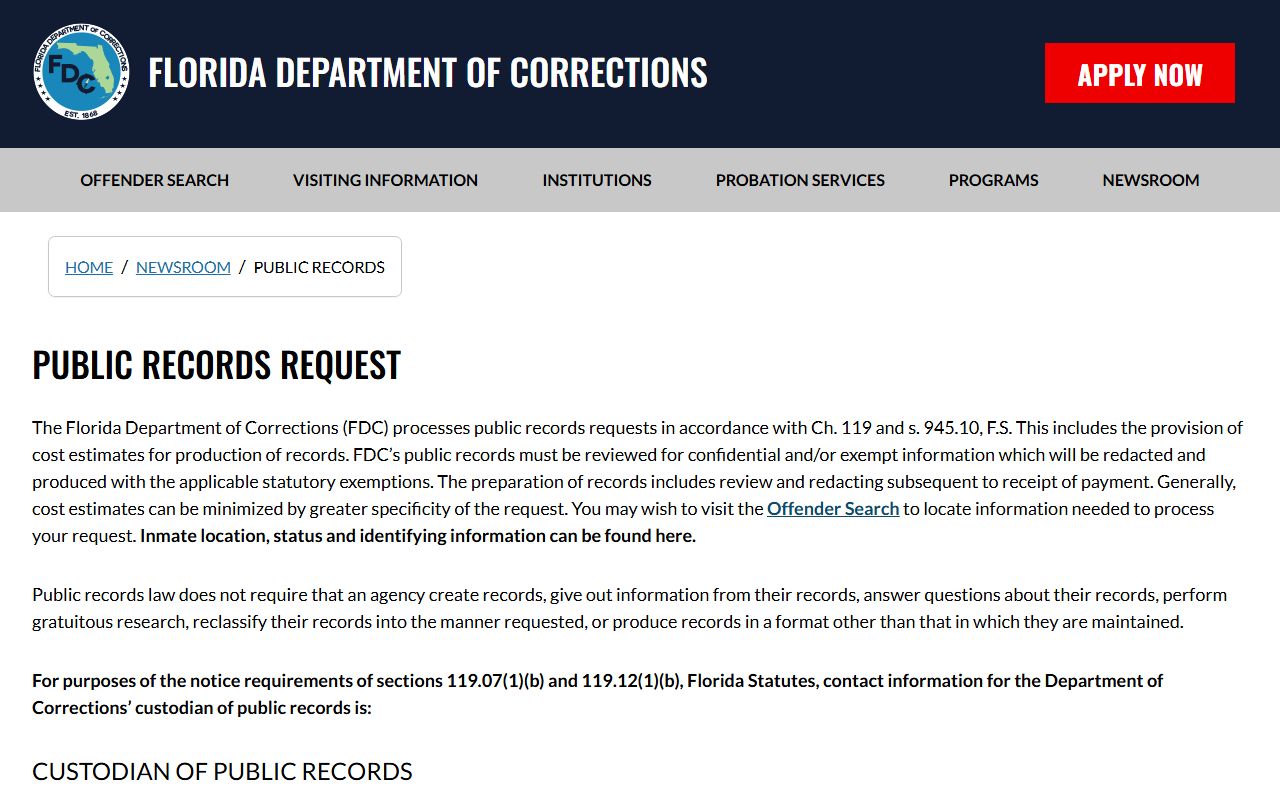
The Florida Department of Corrections handles public records requests under Chapter 119 and Section 945.10 of the Florida Statutes. FDC checks all records for confidential or exempt data before releasing them. Requests should be as specific as possible to keep costs low. Payment is due before records get reviewed and redacted. The department notes that public records law does not require agencies to create new records, answer questions about records, or do free research on your behalf.
The Florida Department of Highway Safety and Motor Vehicles keeps driving records and traffic crash reports. These can tie to arrest records for DUI cases and traffic offenses in Florida. You can request crash records by emailing CrashRecords@flhsmv.gov or calling (850) 617-3416 option 1. For a full list of county jails and inmate search links across Florida, the Department of State has a directory at dos.fl.gov. Each of Florida's 67 counties runs its own jail through the local sheriff's office.
Browse Florida Arrest Records by County
Each county in Florida has its own sheriff's office that manages the local jail and keeps arrest records. Pick a county below to find booking search tools, contact info, and local resources for arrest records in that area.
Arrest Records in Major Florida Cities
City police make arrests but county jails handle booking and detention in Florida. Pick a city to find out which county manages arrest records for that area.